


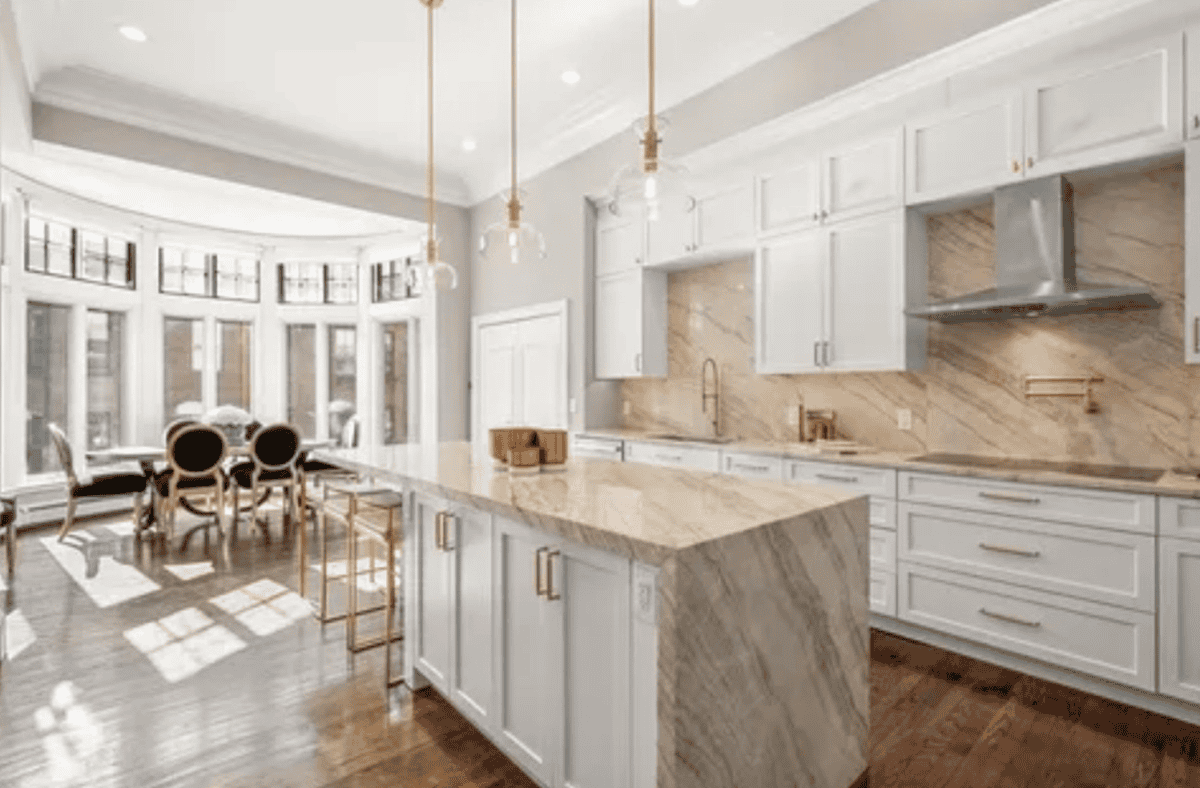
Quartzite is the stone people fall for when they want the soft, flowing look of marble but cannot live with marble’s fragility. It is a natural stone that rivals granite for hardness, yet often reads like a bright white-and-gray marble slab. Here is what quartzite actually is, how it differs from quartz, the real pros and cons, and what it takes to live with it in a busy Boston kitchen.
What is quartzite?
Quartzite is a natural metamorphic stone. It starts as sandstone, then heat and pressure deep in the earth fuse the grains into an extremely hard, dense surface. It is quarried in slabs, just like granite and marble, and no two pieces are identical. Most of the dramatic white-and-gray quartzite you see in Boston kitchens is quarried in Brazil, with notable material from Italy and India as well.
Quartzite vs quartz: not the same thing
The names get confused constantly, but these are very different materials. Quartzite is 100 percent natural stone cut from the earth. Quartz is engineered — crushed mineral blended with resin and pigment in a factory. Quartzite is harder and handles heat far better; quartz is non-porous and never needs sealing. We break the differences down fully in our guide to quartz vs quartzite countertops.
Why homeowners choose quartzite
- It looks like marble. Soft veining, luminous whites, and gray movement — quartzite delivers that high-end natural look without marble’s worries.
- It is extremely hard. Quartzite is one of the hardest natural countertop stones, often scoring above granite on the scale. It resists scratching from knives and everyday wear.
- It handles heat. As a natural stone, quartzite takes a hot pan far better than engineered quartz, which can scorch.
- It resists etching. Unlike marble, true quartzite does not etch from lemon, wine, or vinegar, so it holds up to real cooking.
The trade-offs to know
- It needs sealing. Quartzite is porous, so it should be sealed on installation and periodically after. Sealing is quick, but it is a step quartz owners skip entirely.
- Some “quartzite” is really dolomite. A handful of soft slabs sold as quartzite are actually dolomitic marble and will etch. A reputable fabricator tests the slab so you know exactly what you are buying.
- It is harder to fabricate. That same hardness that makes quartzite durable also makes it tougher to cut and polish, which is reflected in the price. In-house fabrication and the right tooling matter here.
- It sits at the premium end. Quartzite typically costs more than granite and many quartz lines, though pricing varies widely by slab.
Popular quartzite colors
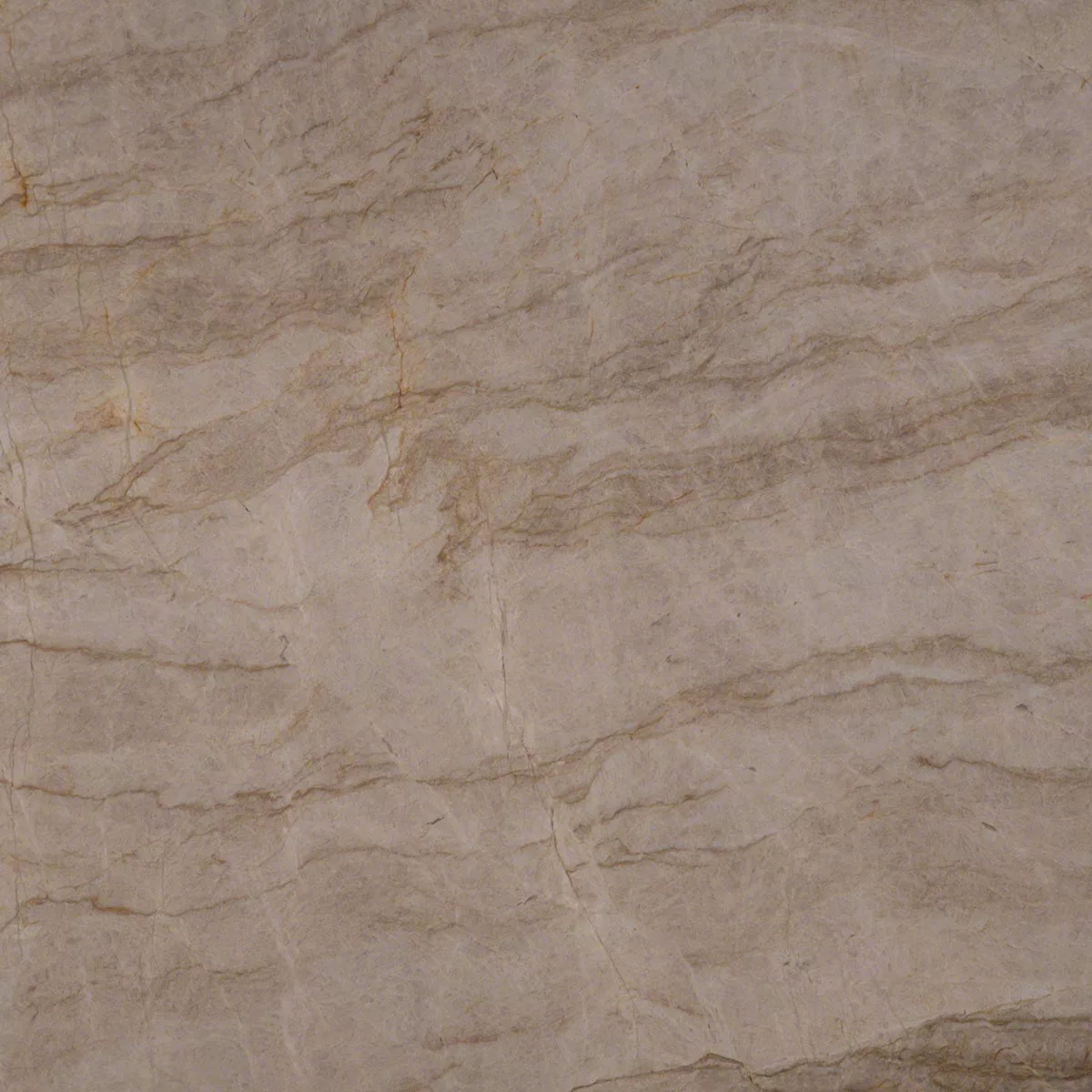
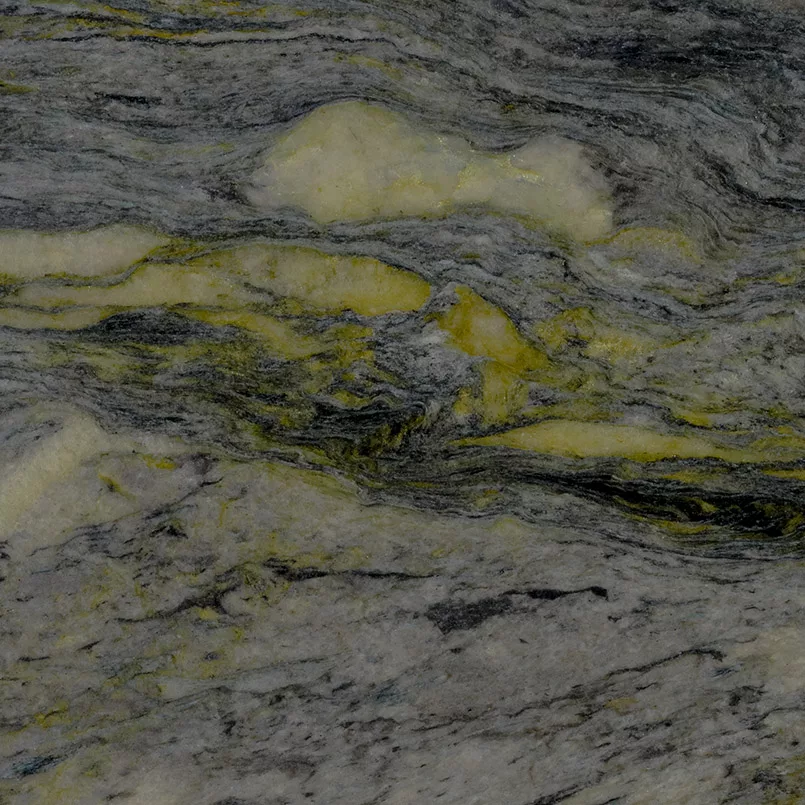
White and gray dominate — names like Taj Mahal, White Macaubas, and Mont Blanc show up again and again in Greater Boston kitchens because they pair so well with white and navy cabinets. There are also dramatic options with deep greens, blues, and gold movement for homeowners who want a statement island. Because every slab is unique, we always recommend selecting your exact piece in person. You can see real installed projects on our quartzite gallery.

Caring for quartzite
Day to day, care is easy: warm water, a little mild dish soap, and a soft cloth. Skip harsh or acidic cleaners, wipe up spills reasonably promptly, and reseal when a few drops of water start to soak in rather than bead up. The finish also plays a role in how it wears — our guide to polished vs honed vs leathered finishes explains how each option looks and holds up.
Thinking about quartzite for your kitchen?
We fabricate and install quartzite countertops in-house in Woburn and serve all of Greater Boston. Book a free in-home estimate and we will help you pick the right slab and confirm it is true quartzite.
If you love the marble look but need a surface that can keep up with a real kitchen, quartzite is hard to beat. Learn more about our quartzite countertop fabrication and installation, or book an estimate and we will bring samples so you can see the movement in person.