


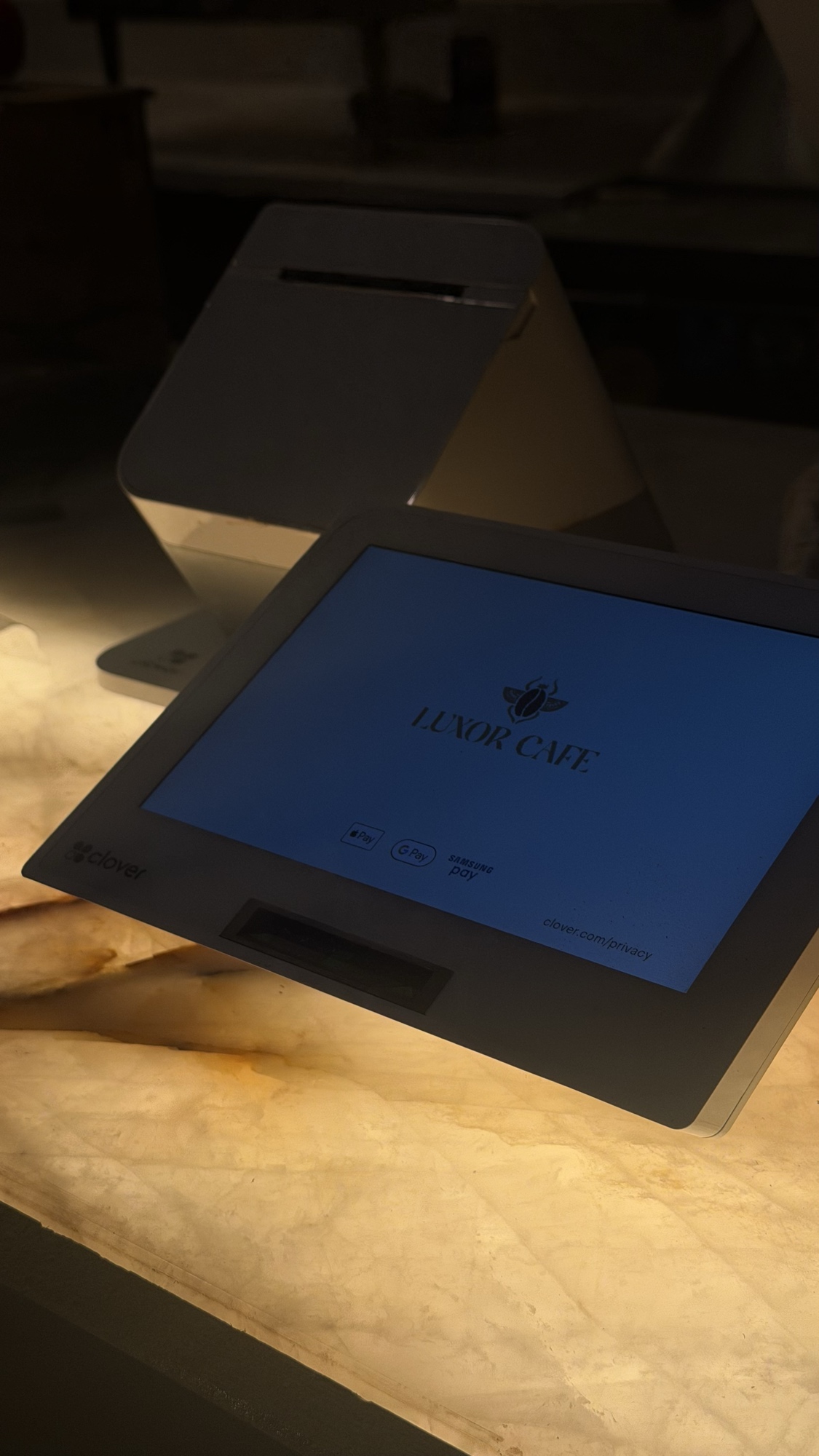
Not every countertop can do this: light a room from underneath. Patagonia quartzite is one of the few natural stones translucent enough to glow when it’s backlit, and it’s become one of the most requested materials for bar tops, reception desks, and statement islands. Here’s where the stone actually comes from, and how we build the lighting into the counter itself — using a real bar top we just finished as the example.
Where Patagonia Quartzite Actually Comes From
Despite the name, Patagonia quartzite isn’t quarried in Patagonia. It’s mined in Brazil, where high-quartz metamorphic deposits produce slabs with the density and clarity to let light pass through. That quartz content is what separates it from an ordinary granite or marble: the crystal structure is tight and glassy rather than opaque, so a slab that looks like frosted ice on the showroom floor turns into something closer to alabaster once there’s a light source behind it.
Every slab we bring in gets tagged at the yard with its finish and origin before it ever reaches our shop — that’s the kind of documentation worth checking for on a translucent material, since not every “Patagonia” slab on the market has the same quartz content or the same glow.
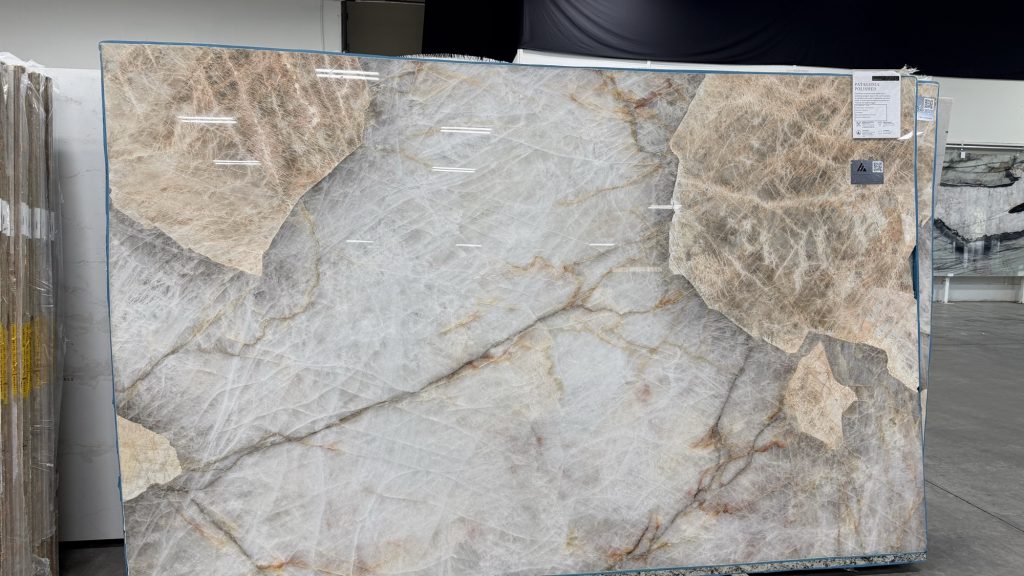
A Backlit Patagonia Bar Top: Luxor Cafe
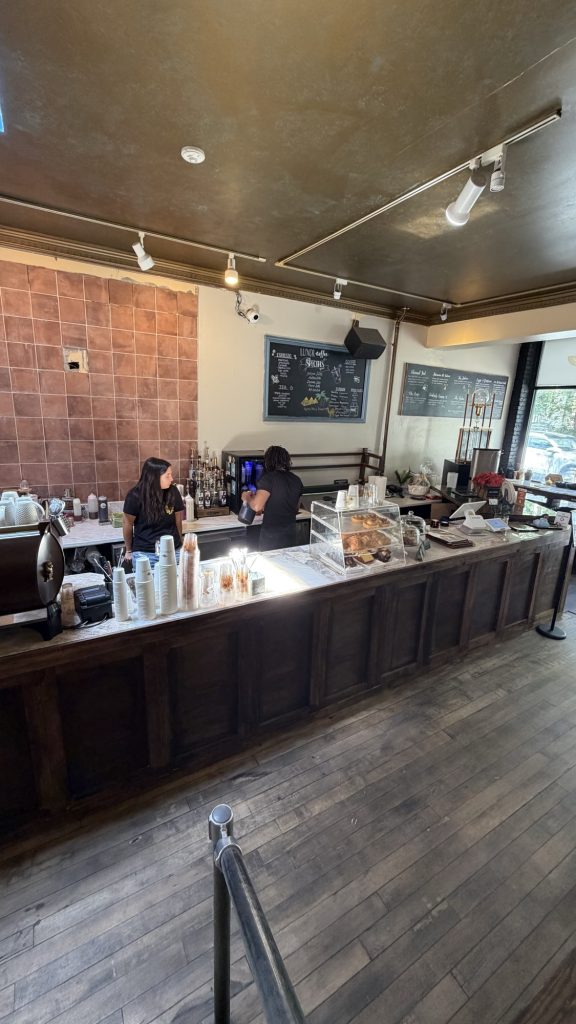
We recently fabricated and installed a Patagonia quartzite bar top for Luxor Cafe, built specifically to be lit from below. During the day it reads as a soft, veined neutral counter. Once the lighting underneath is switched on, the same slab turns warm and amber, with every vein and mineral streak in the stone suddenly visible in a way polish alone never shows.
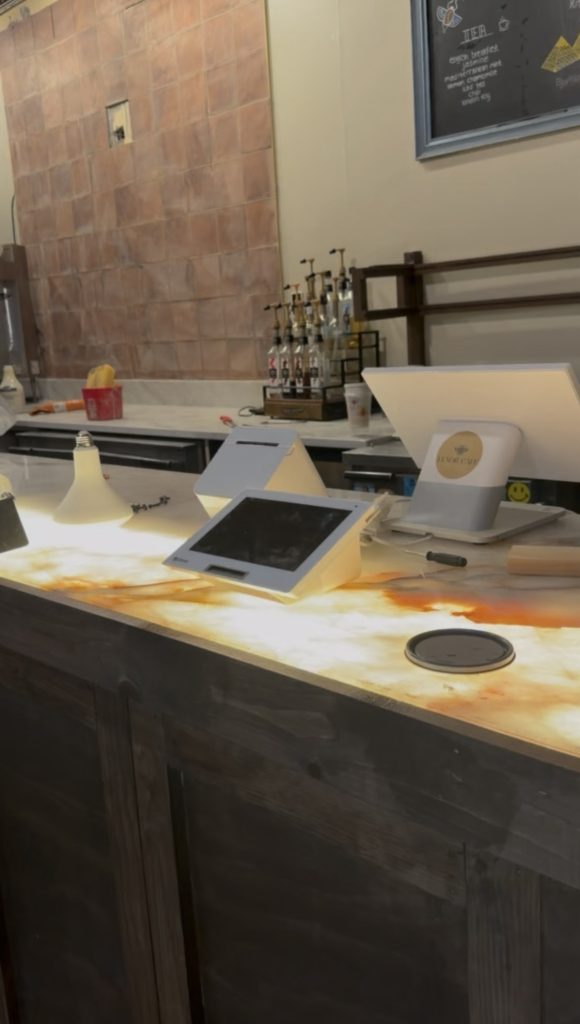
How We Install the Lighting Under the Stone
Backlighting isn’t something added after the fact — it has to be planned into the base cabinetry and the slab layout from the start. Here’s the process we follow:
- Confirm the slab is thin enough to transmit light. We check translucency against the intended light source before fabrication, since not every part of a slab glows evenly — denser or more heavily veined sections can stay darker.
- Build an open cavity in the base cabinet. The support structure under a backlit counter can’t be solid; it needs a lit chamber, typically framed in plywood, sized to the light source with room for airflow so the LEDs don’t overheat against the stone.
- Install an LED panel or strip system. We use flat LED arrays rather than single strip lights whenever possible, since they spread light evenly across the underside of the slab and avoid visible hot spots or striping through the stone.
- Route the wiring and add a dimmer. Power runs through the cabinet base to a switch or dimmer, letting the counter go from a subtle glow to full brightness depending on the space and time of day.
- Set and seal the slab over the light chamber. The stone sits on a support ledge around the cavity, not directly on the LEDs, so there’s no direct heat transfer and the panel stays serviceable if a bulb ever needs to be swapped.
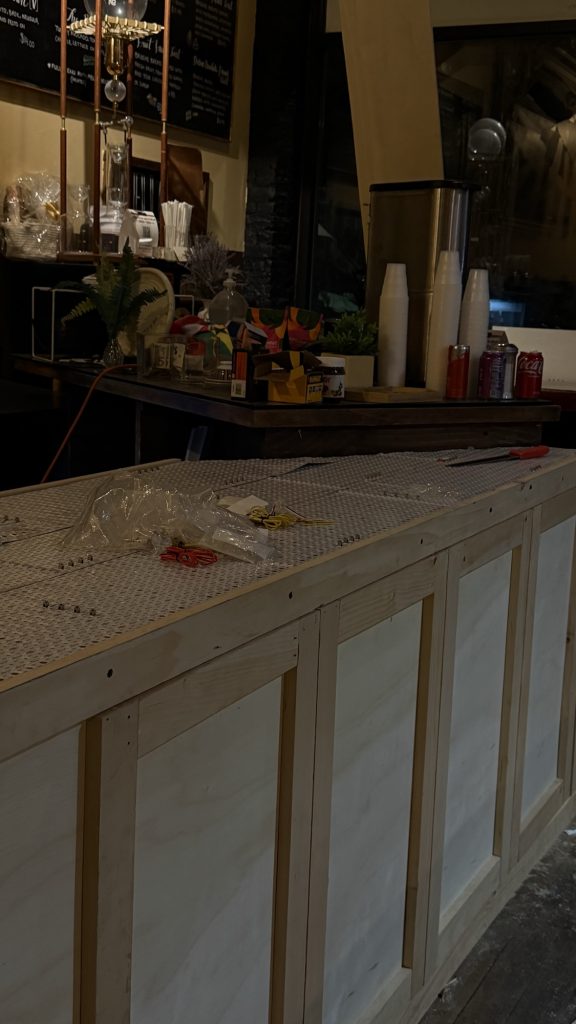
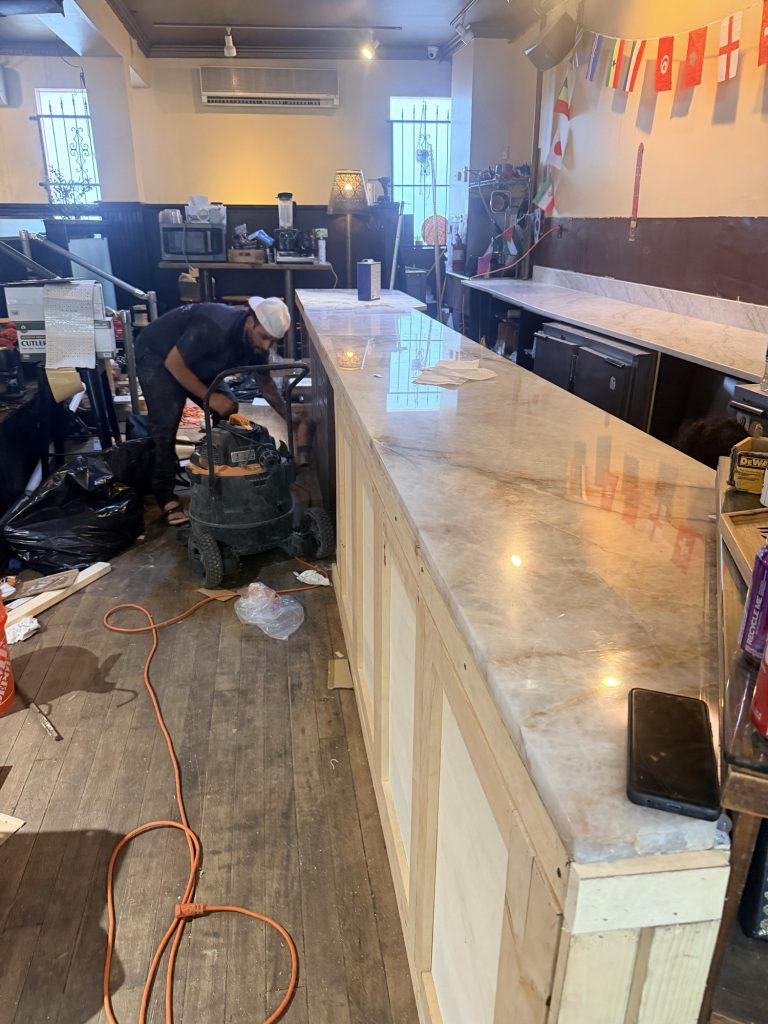
The result is a counter that does double duty: a durable work surface during the day, and a lit design feature once the sun goes down — which is exactly what a coffee bar or hospitality counter needs.
Is Backlighting Right for Your Countertop?
Backlighting works best on quartzite and select translucent marbles — not every stone in our showroom will glow the same way, so it’s worth checking translucency before committing to a design. It’s a popular choice for bars, reception desks, and kitchen islands used as a centerpiece rather than just a work surface. We’ve built it into several commercial countertop projects around Greater Boston, and if you’re weighing quartzite against other natural stones for your own project, our quartzite pros and cons guide is a good next read.
Thinking about a backlit Patagonia quartzite counter for your home or business? Contact Pablo Marble and Granite, LLC for a free estimate — we’ll help you pick a slab with the right translucency and build the lighting in from day one.