


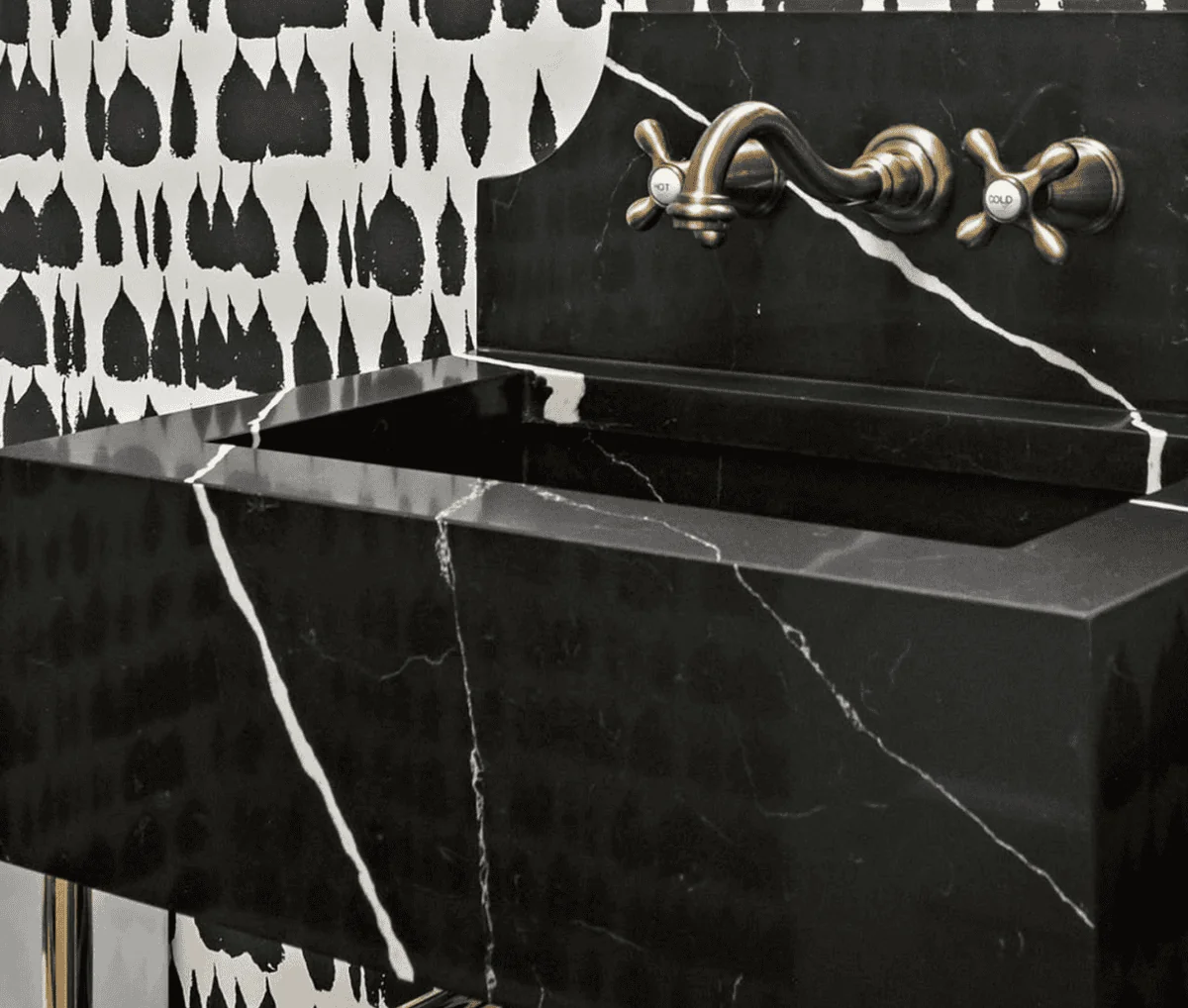
Most sinks are picked from a catalog. A handcrafted stone sink is built — cut, shaped, and polished from the same slab family as your countertop, so the basin and the counter read as one continuous piece of stone. It is the kind of detail that quietly separates a custom kitchen or bath from a standard one. Here is what goes into a handcrafted stone sink, the styles we fabricate, and how to decide if one belongs in your project.
What makes a sink “handcrafted”?
A manufactured sink is stamped or molded by the thousands. A handcrafted stone sink starts as slab material in our Woburn shop and is mitered, bonded, and hand-polished into a basin built for your exact cabinet and counter. The walls are real stone, the seams are fabricated to near-invisibility, and the finish matches your countertop because it often comes from the same lot. Nothing about it is off the shelf, and that is the point.
Styles we fabricate
Integrated sinks are the showpiece: the basin is built from the countertop material itself, so the counter flows straight down into the bowl with no rim and no transition. Farmhouse and apron-front sinks in stone bring serious visual weight to a kitchen, with a thick exposed face that shows off the material. Vessel and vanity basins carved or fabricated from marble turn a bathroom into something closer to a spa. Each one is planned against the actual slab so veining lands where you want it.
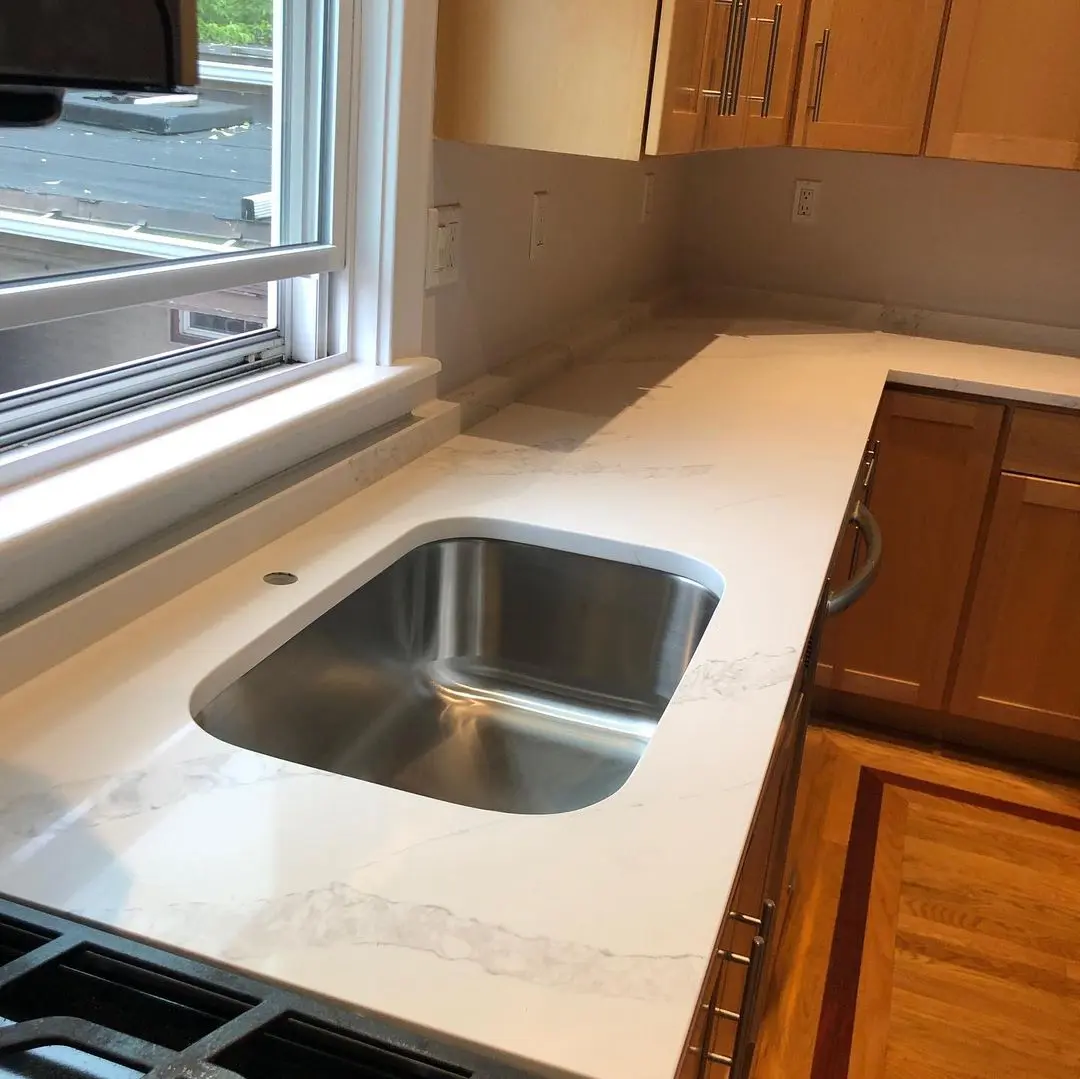
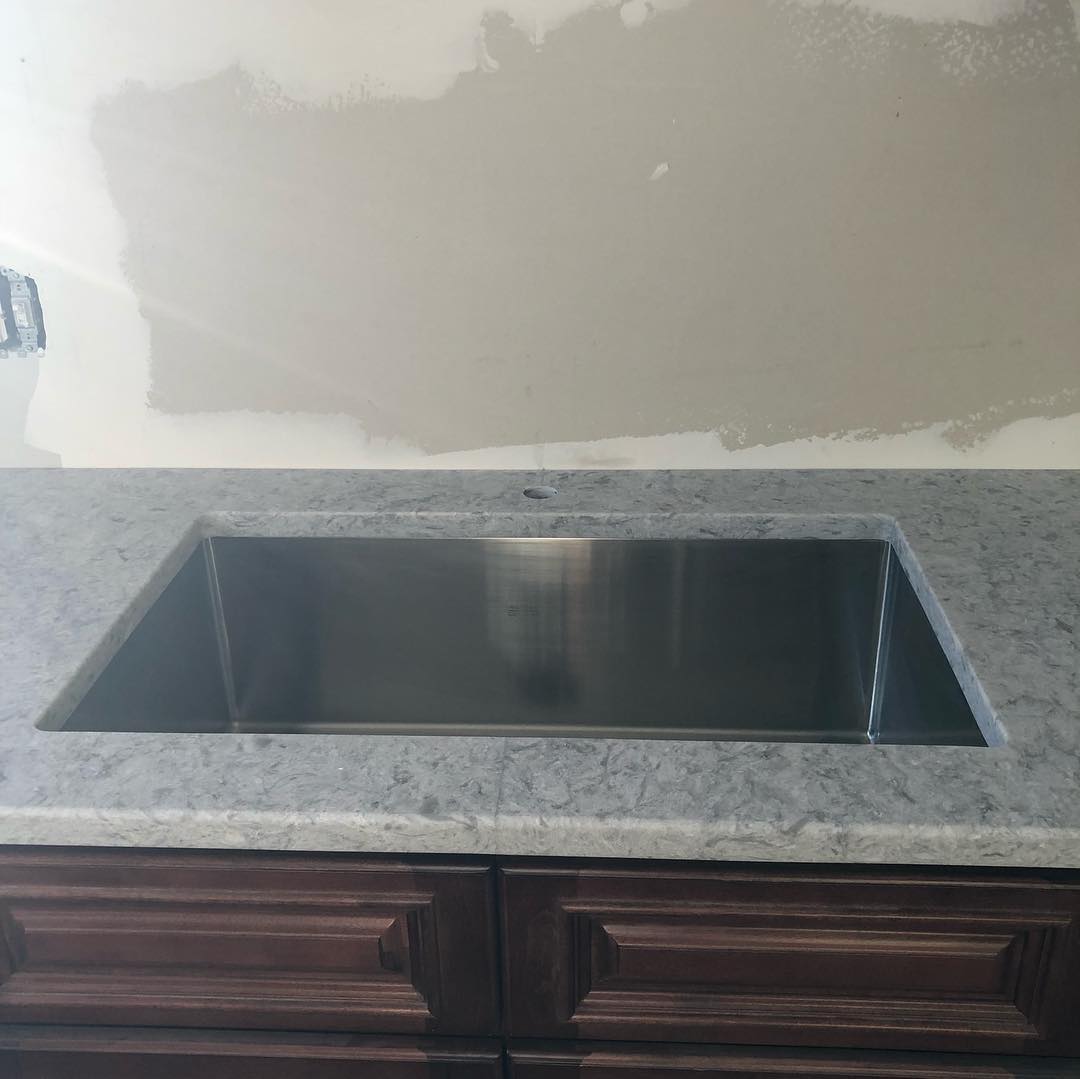
Best stones for a sink
Granite is the workhorse — dense, scratch-resistant, and unbothered by hot pans and daily kitchen abuse. Quartzite offers a bright, marble-like look with hardness to spare. Marble is the classic choice for bathroom basins and vanities, where it sees gentler use and its soft veining does the most visual work. Soapstone deserves a special mention for sinks: it is non-porous, completely unfazed by acids, and darkens into a beautiful charcoal patina — it has been used for utility and farmhouse sinks in New England for well over a century.
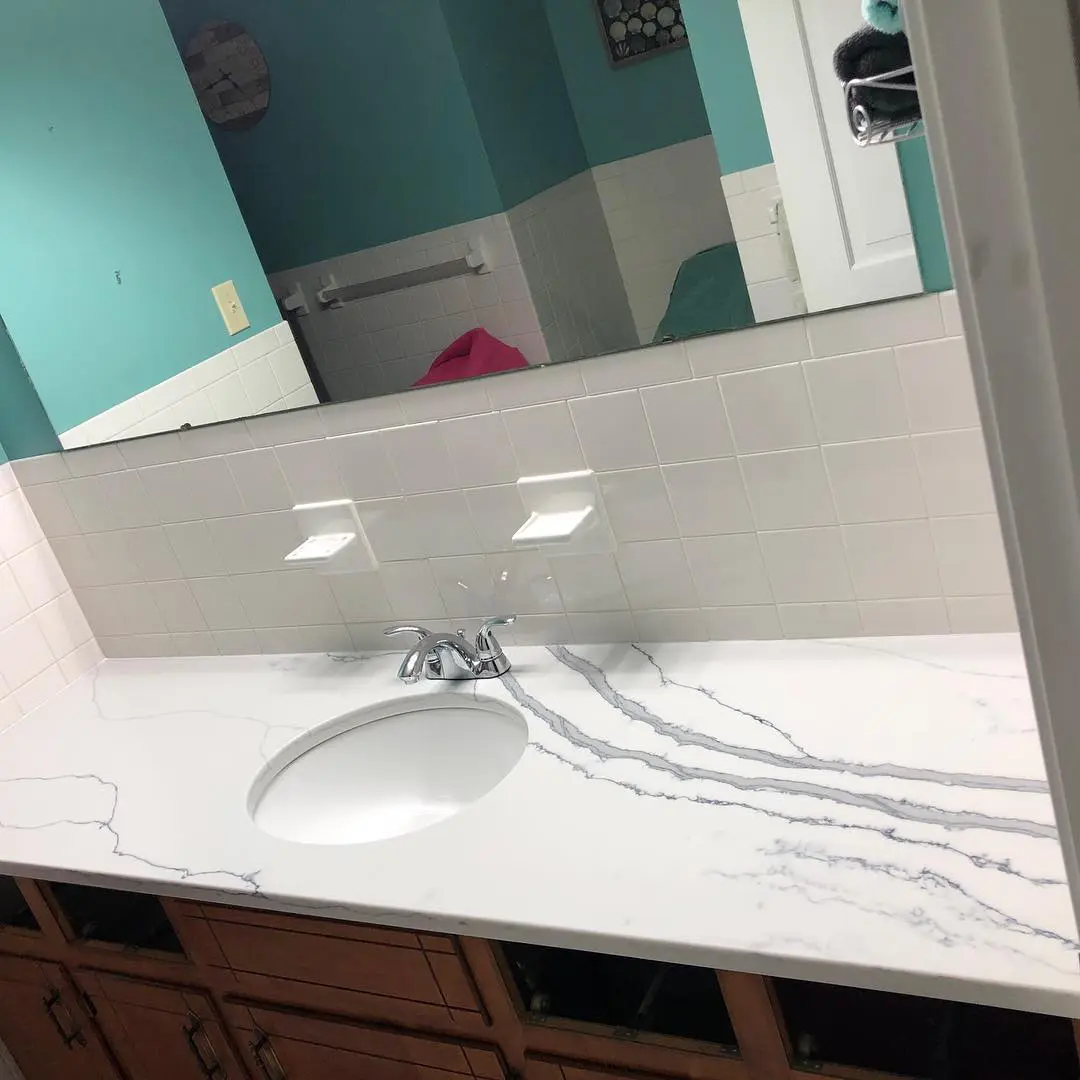
How fabrication works
Every handcrafted sink starts with a template of your cabinet and a layout against the slab. The basin walls are cut and mitered so the stone’s face wraps the visible edges, then bonded, reinforced, and polished by hand. Drain placement, slope, and overflow are engineered before the first cut. Because we fabricate in-house at our 5,000 square foot Woburn shop, the sink, the countertop, and details like a full-height stone backsplash are all planned from the same material at the same time — which is the only way to get a true match.
Living with a stone sink
Care depends on the stone. Granite and quartzite sinks need little more than a periodic reseal and a wipe-down. Marble basins prefer pH-neutral cleaners and a quick rinse after toothpaste or cosmetics sit on them. Soapstone wants nothing at all — mineral oil if you like the dark patina, plain use if you prefer it to age naturally. None of them will ever dent, rust, or peel the way metal and composite sinks eventually do. If you are weighing materials for the whole project, our granite vs marble guide walks through the trade-offs in detail.
Is a handcrafted sink right for your project?
If you are already investing in a quality slab countertop, a handcrafted sink is the upgrade that ties the whole surface together — especially in an open kitchen where the island is the centerpiece, or a primary bath where the vanity sets the tone. It costs more than a drop-in from a box store because it is fabricated, not bought, but it is also the detail guests notice first. See finished examples and styles on our handcrafted stone sinks page.
Want a sink cut from the same stone as your counter?
We fabricate handcrafted stone sinks in-house in Woburn and install across Greater Boston. Book a free in-home estimate and we will plan the basin, the counter, and the slab layout together.
Building out a full statement kitchen? Pair a handcrafted sink with a waterfall island or a full-height backsplash and the whole room reads as one piece of stone.