



Granite and marble are the two classic natural stones, and homeowners often weigh them against each other for the same kitchen or bath. They look related, but they behave very differently in daily use. One is built for hard-working kitchens; the other is a showpiece that rewards a gentler touch. Here is a straight comparison to help you choose the right one for your space.
The core difference
Both are natural stones quarried in slabs, but they form differently. Granite is an igneous stone — molten rock cooled into a hard, speckled, crystalline surface. Marble is a metamorphic stone, mostly calcium carbonate, which gives it that soft, flowing veining people love. That single chemistry difference drives almost everything below: granite is harder and more chemically stable, while marble is softer and reacts to acids.
Durability and daily use
Granite is the workhorse. It resists scratches, takes heat well, and shrugs off the bumps of a busy family kitchen. Marble is softer and more easily scratched or chipped at the edges, so it asks for a little more care. For a cooking-heavy household that wants natural stone with minimal worry, granite is usually the more forgiving choice.
Etching and staining: the big one
This is where the two really part ways. Marble etches — acidic foods like lemon, wine, tomato, and vinegar leave dull spots by reacting with the stone, regardless of sealing. Granite does not etch and resists staining well, especially when sealed. If the idea of a faint ring near the sink would bother you, that matters. If you see those marks as natural patina, marble may not faze you at all.
Looks and style
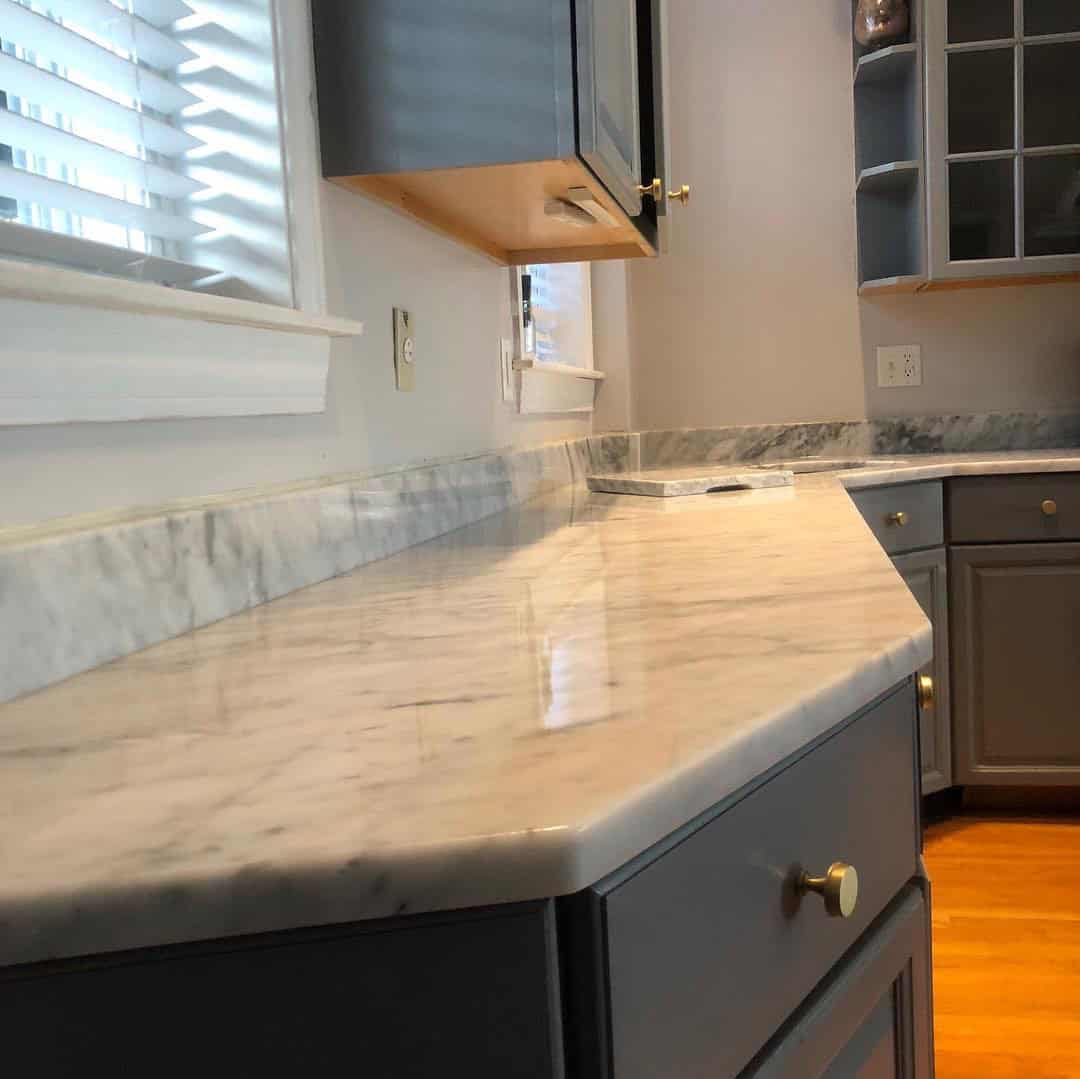
Marble wins on pure elegance for many people — luminous whites and gray veining that feel timeless and high-end. Granite offers far more color and pattern variety, from dramatic movement to consistent speckled tones, and it pairs beautifully with both white and dark cabinetry. If you are leaning granite with white cabinets, our guide to the best granite colors for white kitchen cabinets is a good starting point.

Maintenance
Both should be sealed, and both clean up with warm water and mild soap rather than harsh chemicals. The difference is the margin for error: granite is more tolerant, while marble rewards prompt spill cleanup and acid-free care. We cover the routines in detail in how to clean and seal granite countertops and how to care for marble countertops.
Cost
Both span a wide range depending on the slab, but granite generally offers more budget-friendly options, while premium marbles such as Calacatta sit at the higher end. Exotic slabs of either stone can climb quickly. The most reliable way to compare is on the exact slabs you like, with an installed quote rather than a per-square-foot guess.
So which should you choose?
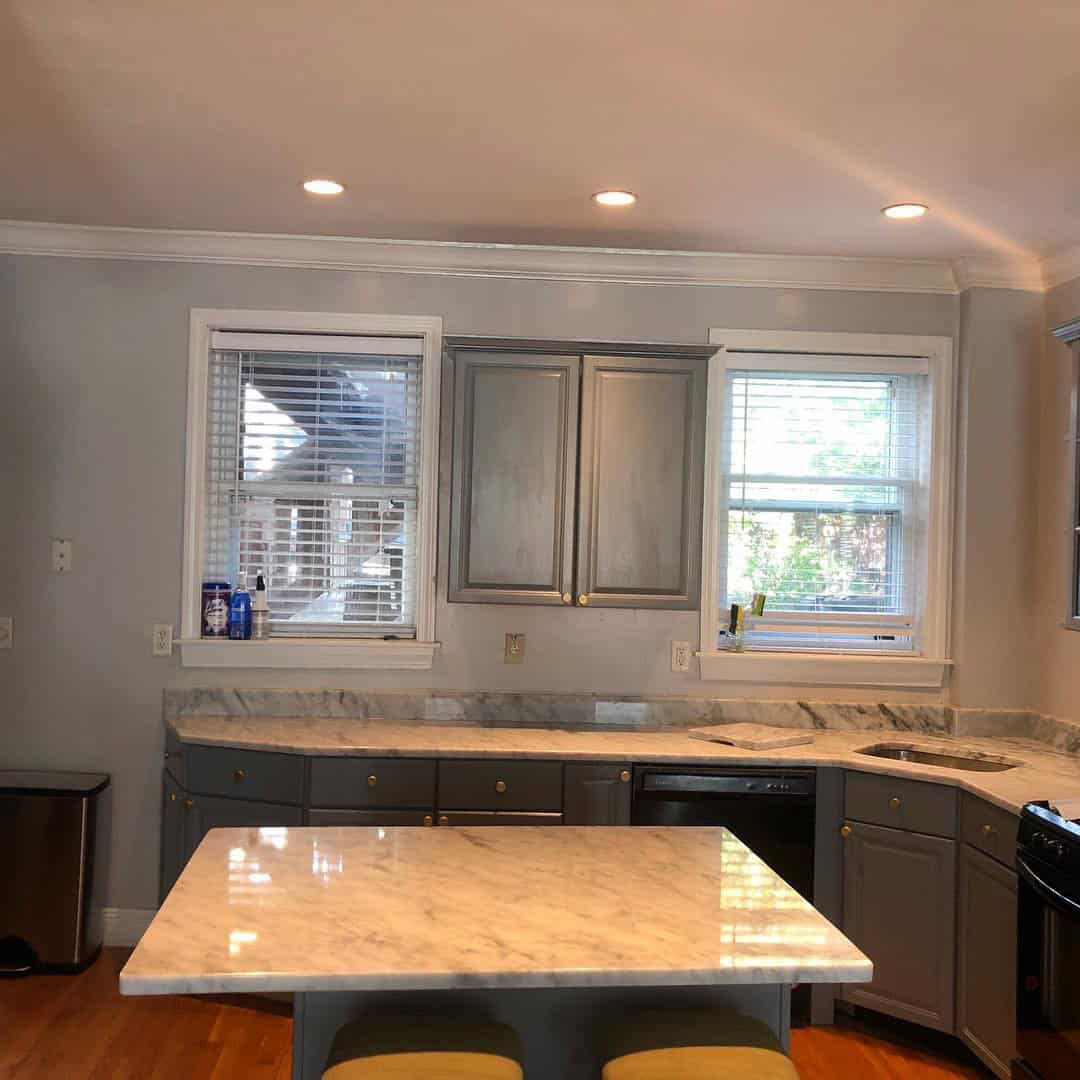
A simple rule of thumb: choose granite for hard-working kitchens where you want durability and low worry, and choose marble where beauty leads and use is gentler — a baking station, a bathroom vanity, a fireplace surround, or a statement island you will treat with care. In fact, a marble bath is one of the best places to enjoy the stone with less etching risk, as we explain in our guide to marble bathrooms. Many Boston homeowners use both in the same home.
Still deciding between granite and marble?
We fabricate and install both in-house in Woburn and serve all of Greater Boston. Book a free in-home estimate and we will bring samples so you can compare them side by side in your own light.
Want to dig into one material? Explore our granite countertops and marble countertops pages, or book an estimate and we will help you choose the right stone for each room.