


The edge profile is one of the smallest decisions in a countertop project, and one of the most visible. You will see it and touch it every single day. It also affects price, safety, and how dated the kitchen looks ten years from now. At Pablo Marble and Granite, LLC, we cut every edge profile in-house at our Woburn shop, and after eight years and hundreds of Greater Boston kitchens, we have clear opinions on which edges work and which to skip. Here is the full rundown.
Eased Edge: The Modern Default
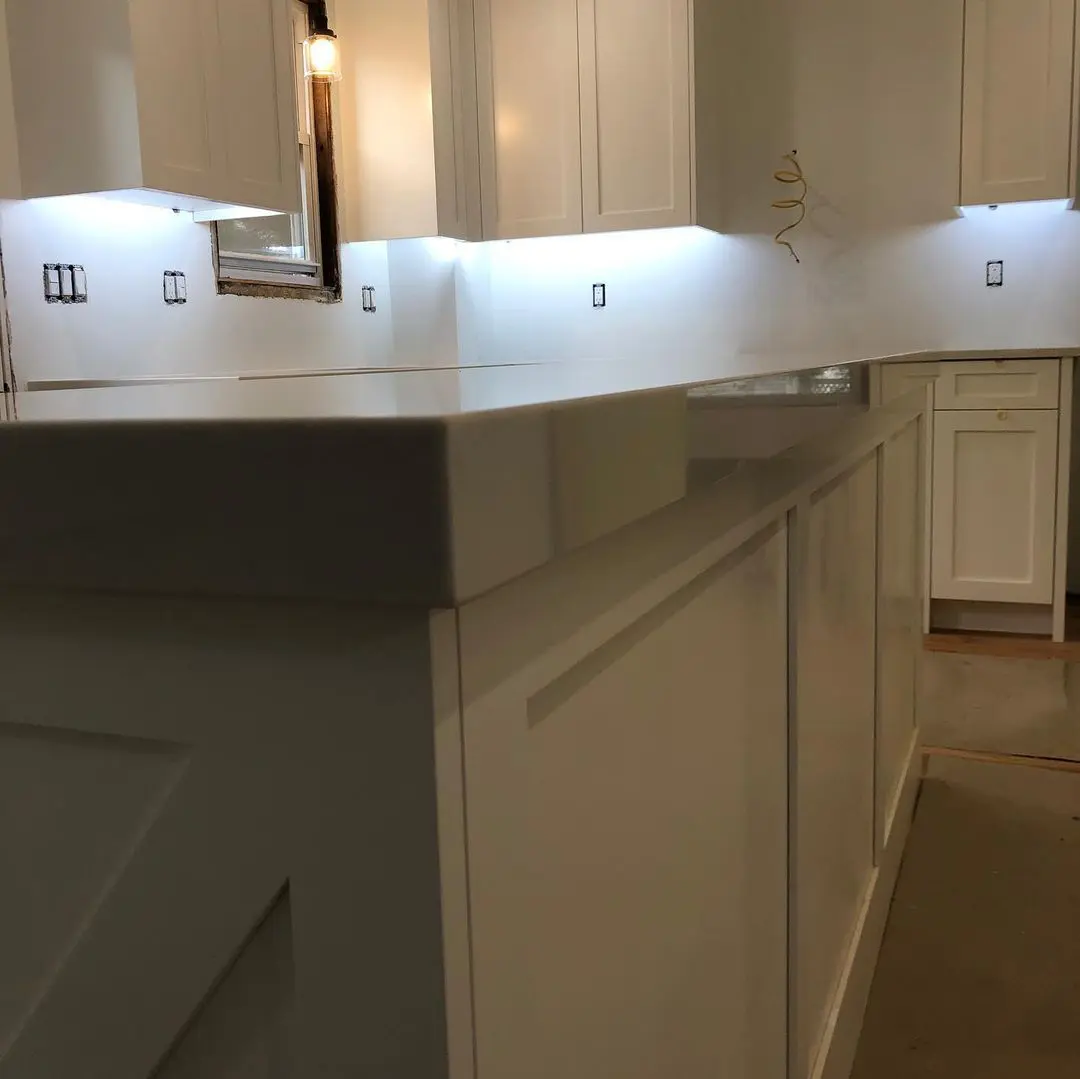
An eased edge is a square edge with the sharp corner softened just enough to be safe and chip-resistant. It is the cleanest, most contemporary look and the one we install most often, especially with quartz. It suits white shaker kitchens, modern flat-panel kitchens, and almost everything in between. It is also typically included in the base fabrication price, which makes it the best value on this list.
Bullnose and Half Bullnose: The Soft Classics
A full bullnose rounds the entire edge into a smooth half-circle. A half bullnose rounds only the top. Both feel soft to the touch and are forgiving in busy households — there is no corner to chip and nothing sharp at kid height. The trade-off is style: a full bullnose reads as traditional, and in granite it can date a kitchen to the 2000s. We still recommend the half bullnose for classic granite kitchens and bathroom vanities where a softer line fits the room.
Beveled Edge: A Crisp Detail
A bevel slices a flat 45-degree chamfer along the top corner. It catches light along the edge and adds a tailored, architectural detail without going ornate. It pairs well with darker stones where the bevel line shows up as a bright accent. Cost is modest — usually a small upcharge over eased.
Ogee: The Formal Statement
An ogee is the S-shaped decorative profile you see in formal, traditional kitchens — think cherry cabinetry, raised panels, and warm granite. It is beautiful in the right room and out of place in a modern one. Because it removes more material and takes more machine and polish time, it carries the highest upcharge of the standard profiles. If your kitchen leans transitional rather than truly traditional, a half bullnose or bevel usually serves you better.
Mitered Edge: The Thick, Built-Up Look
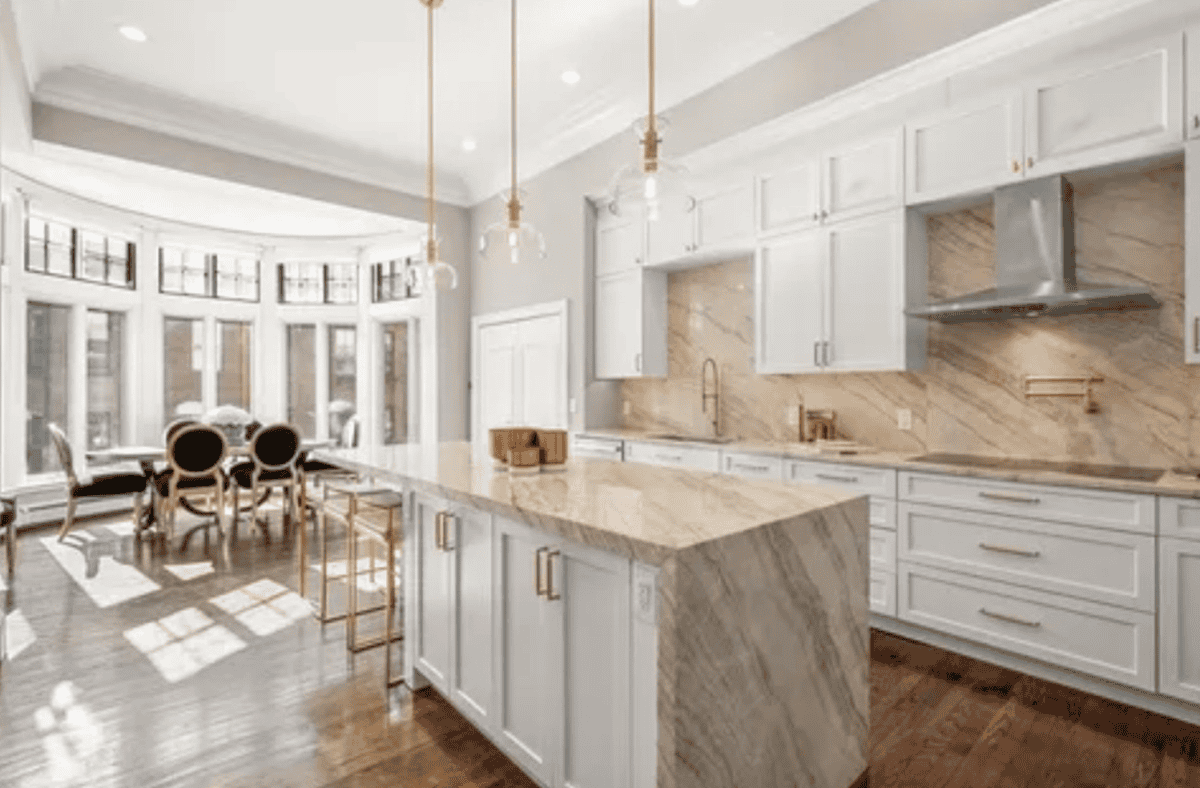
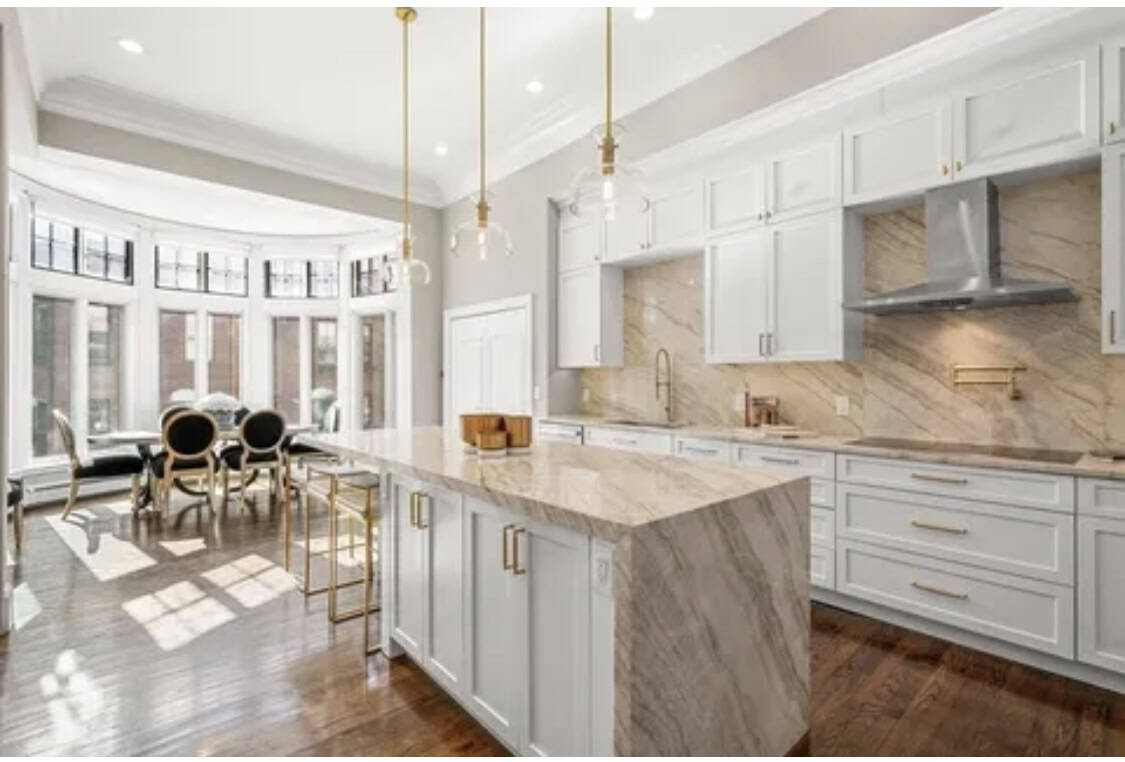
A mitered edge is different from everything above. Instead of shaping the slab edge, we cut two pieces at 45 degrees and join them so the countertop appears two or three inches thick — sometimes more. It is the signature detail of high-end modern kitchens and the technique behind waterfall islands, where the stone flows down the side of the island to the floor. The veining wraps the corner continuously, which takes precise fabrication. We build these regularly; you can see how on our mitered edge countertops page, and see the full effect in our quartz waterfall island guide.
How to Choose: Three Questions
- What is the cabinet style? Flat-panel and shaker cabinets call for eased, beveled, or mitered edges. Raised-panel traditional cabinets can carry a bullnose or ogee.
- Who uses the kitchen? Small kids and tight galley kitchens favor rounded profiles. Edges at hip height get bumped constantly.
- What is the stone? Quartz and quartzite look best with crisp, simple edges that show off the material. Ornate profiles suit granite and marble in traditional rooms.
The pattern we see across Greater Boston is consistent: renovations in dense, older housing stock like Cambridge go almost entirely eased and mitered, while larger family kitchens in towns like Newton split between eased for modern remodels and half bullnose for classic ones.
Edge Profiles and Cost
As a rule of thumb: eased is included, bevel and half bullnose are a small upcharge, full bullnose and ogee cost more, and mitered edges are priced per linear foot because they involve cutting and joining additional stone. On a typical kitchen the difference between the cheapest and most expensive standard profile is a few hundred dollars — small relative to the total project, so choose the edge that fits your kitchen, not just the budget line.
See Edge Samples in Person
Not sure which edge fits your kitchen?
Visit our Woburn showroom and handle real edge samples on real stone, or call 781-696-2990. We will quote every profile option in writing so you can compare.